
Portfolio
Outside-In Design
GameBux Web site: B2B/B2C
Objective:
B2B/B2C
Create a web site that supports both B2B and B2C customers
User Story – Online Game Publisher
As a small online game publisher who offers low cost virtual goods I want my customers to be able to use a virtual currency so that they do not need to use a credit card for every purchase.
Without an in-game virtual currency my customers will be less likely to make impulse purchases which which are a key revenue generator.
User Story – Online Gamer
As an online gamer who likes to enhance my game play with game play upgrades I want a quick way to grab some extra play power on the fly without needing to give my credit card to another online company.
Strategy:
- Web site needs to cater to both gamers and publishers.
- Publishers to see that the currency is widely adopted and has a large customer base.
- Players want to see that this virtual currency can be used in recognized, desirable applications.
- Both want to feel that the company, “GameBux” is trustworthy and will continue to offer value.
- “GameBux” identity needs to align with online gaming so that the brand is synonymous with playing on-line games.
Home Page
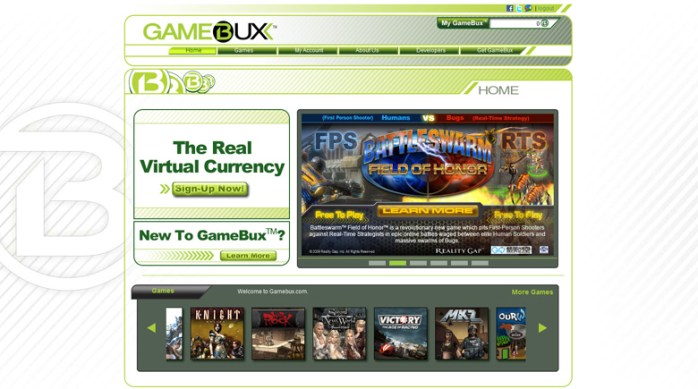
The home page needed to support both the promotion of e-commerce clients, those who had contracts to utilize the GameBux virtual currency as well as those who wanted to use their GameBux to purchase content.
Purchase Page
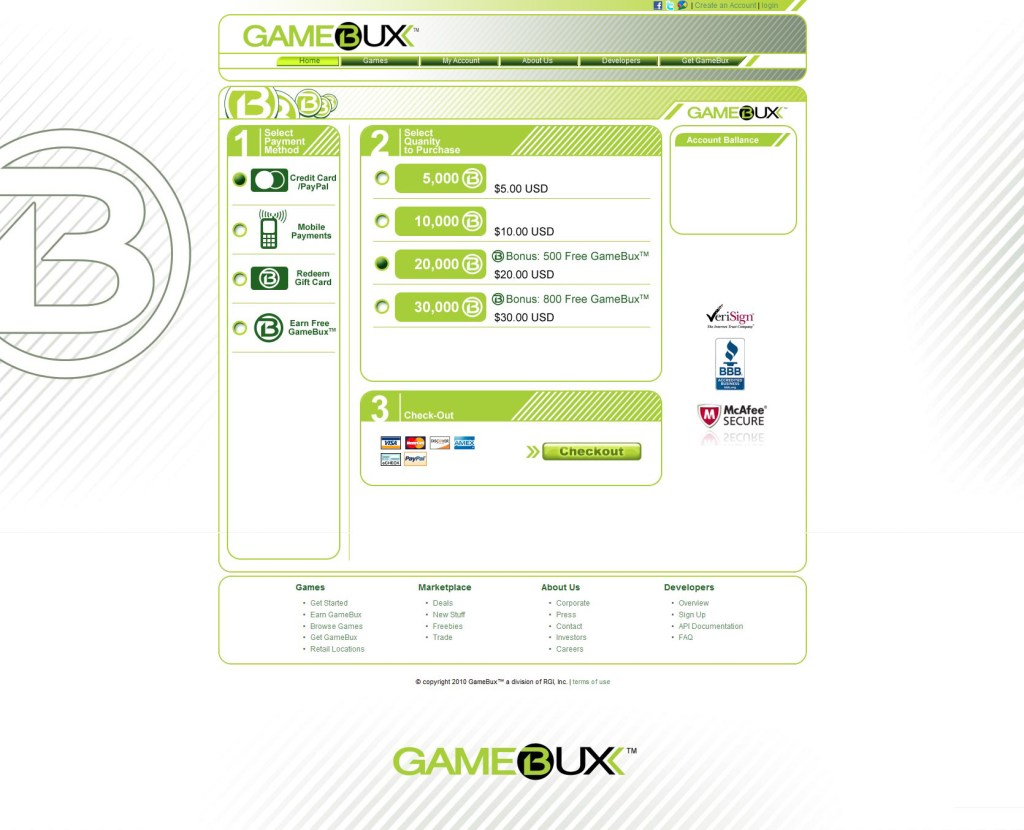
The advantage of GameBux was that game publishers didn’t need to set up accounts with credit card companies, something that at the time, 2009, was more difficult than it is today. This enabled small developers to sell small micro-purchases, a practice that in the early days of e-commerce was not supported cost-effectively, if at all.
Requirements
- Support multiple ways to purchase or redeem “GameBux” into your account
- Support package logistics that varied depending on the purchase method
- Credits Cards and Mobile payments had different purchase value restrictions.
- Redeeming Gift Cards didn’t need the package selection widget, but did need a text field for entering and validating the unique Gift Card number.
- Earning “GameBux” required listing offers from 3rd Party vendors that would give you “Bux” for engaging with their service.
- Help users quickly evaluate each of their options while limiting the cognitive load associated with this effort.
- Support future purchase methods
- Not shown in this early mock-up is the ability to Purchase Gift Cards, but that transaction can easily be supported by the dynamic interface pattern in this design.
Simple flow | Multiple Purchase Methods
I wanted to create a consistent, 3 Step, purchase path that would allow customers to be able to easily explore the payment options available without cluttering the screen with every package variant available.
- Selecting the Transaction Type
- The interaction pattern established in step 1 is to dynamically update what options and/or instructions are displayed in the box for both step 2 and 3.
- Package Options and Selection
- This section would dynamically change to display only information pertinent to what transaction type is selected in step 1.
- This section can support multiple interaction pattern types such as selecting an option from a list, entering a redemption code into a text field or even just details about the transaction.
- Check-Out/Initiate Transaction
- This section also needed to be capable of dynamically changing the check-out methodology depending on the type of transaction.
- Back-end functionality also needs to support a variety of initiation events and interfacing with secure 3rd party servers to complete the transaction.
 Portfolio